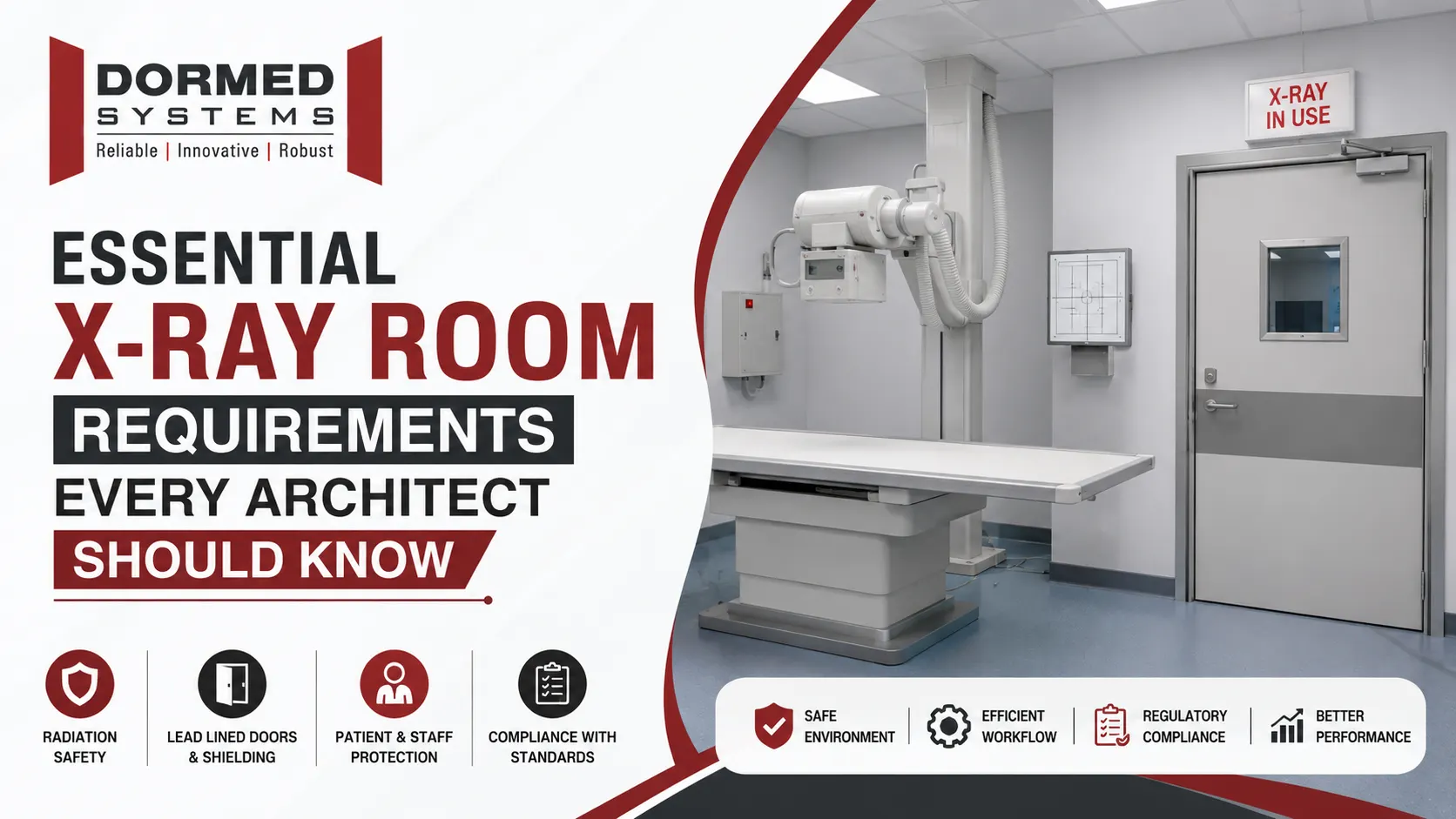
Designing an X-ray room involves much more than allocating space for imaging equipment. Architects must consider radiation safety, workflow efficiency, patient comfort, regulatory compliance, and future expansion requirements. A properly designed X-ray room not only protects patients and healthcare professionals but also ensures smooth operations and optimal imaging performance.
Whether planning a diagnostic center, hospital, or specialized imaging facility, understanding the essential requirements of an X-ray room is critical. One of the most important aspects of X-ray room construction is radiation shielding. This is where products such as lead-lined doors and anti-radiation doors play a vital role in preventing radiation leakage and maintaining a safe healthcare environment.
Why Proper Radiology Room Design Matters
X-ray equipment generates ionizing radiation, which can pose health risks if not properly controlled. The design of the room must incorporate adequate shielding and safety measures to minimize radiation exposure to staff, patients, and the public.
Proper planning also improves workflow, enhances patient experience, and ensures compliance with healthcare regulations
1. Adequate Room Size
The room dimensions should accommodate:
- X-ray machine and accessories
- Patient positioning area
- Technician workspace
- Radiation shielding structures
- Future equipment upgrades
The exact room size depends on the type and capacity of the X-ray system being installed.
2. Radiation Shielding Requirements
Radiation protection is one of the most critical aspects of X-ray room design. Shielding materials are incorporated into walls, doors, windows, and ceilings to prevent radiation leakage.
Common shielding materials include:
- Lead sheets
- Lead-lined gypsum boards
- Lead glass viewing windows
- Radiation shielding doors
The required shielding thickness depends on:
- Equipment output
- Workload
- Room occupancy
- Distance from adjacent areas
3. Lead-Lined Doors and Windows for Radiology Room
X-ray rooms typically require:
Lead-Lined Doors
- Prevent radiation leakage
- Durable and easy to opera
- Available in various lead equivalencies
Lead Glass Viewing Windows
- Allow technicians to monitor patients safely
- Provide clear visibility during imaging procedures
- Maintain radiation protection standards
4. Control Room Design
A separate control area should be provided for radiology technicians.
The control area generally includes:
- Operator console
- Exposure controls
- Computer workstation
- Patient monitoring facilities
5. Wall, Floor, and Ceiling Considerations for X- Ray Room
Architects should evaluate all surrounding spaces before finalizing shielding requirements.
Important considerations include:
- Occupancy of adjacent rooms
- Multi-floor building layouts
- Structural load capacity
- Shielding integration within walls and ceilings
Proper coordination with radiation protection experts helps determine the appropriate shielding specifications.
6. Electrical Requirements
Modern X-ray systems require a reliable power supply.
Electrical planning should include:
- Dedicated power circuits
- Proper grounding
- Voltage stabilization
- Emergency power backup
- Equipment-specific electrical provisions
7. HVAC and Ventilation
Comfortable environmental conditions improve patient experience and equipment performance.
- Adequate air circulation
- Temperature control
- Humidity management
- Low-noise operation
8. Patient Accessibility
Accessibility should be incorporated into the room design from the beginning.
- Wheelchair-friendly access
- Wide doorways
- Non-slip flooring
- Easy patient movement pathways
9. Lighting Design
Lighting plays an important role in diagnostic imaging environments.
- Adjustable room lighting
- Glare-free illumination
- Energy-efficient fixtures
- Examination-focused lighting zones
10. Regulatory Compliance
Every X-ray room must comply with applicable radiation safety guidelines and healthcare regulations.
- Radiation protection standards
- Shielding calculations
- Equipment approvals
- Safety inspections
- Documentation and certification
Working with experienced radiation protection specialists helps ensure compliance throughout the project lifecycle.
Common Mistakes Architects Should Avoid
- Underestimating shielding requirements
- Inadequate room dimensions
- Poor workflow planning
- Insufficient electrical provisions
- Ignoring future expansion needs
- Improper placement of control areas
- Lack of coordination with radiation experts
Avoiding these mistakes can save significant time and costs during construction and operation.
Importance of Lead-Lined Doors and Anti-Radiation Doors in X- Ray Room
Doors are one of the most critical components in an X-ray room’s shielding system. Standard doors cannot effectively block radiation and may lead to radiation leakage.
Dormed System India Pvt. Ltd. is a leading Lead Lined Door and Anti-Radiation Door Manufacturer, offering specialized radiation protection doors for hospitals, diagnostic centers, radiology departments, CT scan rooms, and healthcare facilities. These doors are designed to provide effective radiation shielding while ensuring durability, smooth operation, and compliance with safety standards.
Benefits of lead-lined and anti-radiation doors include:
- Prevention of radiation leakage
- Enhanced safety for staff and patients
- Compliance with radiation safety regulations
- Long service life and reliable performance
- Suitable for X-ray, CT scan, and diagnostic imaging rooms
Why Choose Dormed System India Pvt. Ltd.?
Dormed System India Pvt. Ltd. is a leading Lead Lined Door and Anti-Radiation Door Manufacturer, providing radiation shielding doors for radiology rooms, X-ray rooms, CT scan rooms, diagnostic imaging centers, and healthcare facilities. Their products are designed to minimize radiation leakage and help healthcare institutions meet safety and regulatory requirements.
Key Advantages
- High-quality lead-lined doors
- Advanced anti-radiation door solutions
- Custom manufacturing options
- Compliance with radiation safety standards
- Durable and reliable construction
- Expert technical support
- Solutions for X-ray, CT scan, and radiology rooms
Conclusion
Proper X-ray room design requires careful attention to room layout, shielding systems, ventilation, accessibility, and regulatory compliance. Among all shielding components, lead-lined and anti-radiation doors play a crucial role in maintaining radiation safety. By partnering with an experienced Lead Lined Door Manufacturer such as Dormed System India Pvt. Ltd., architects and healthcare facility planners can create safe, efficient, and compliant diagnostic environments that meet modern healthcare standards.