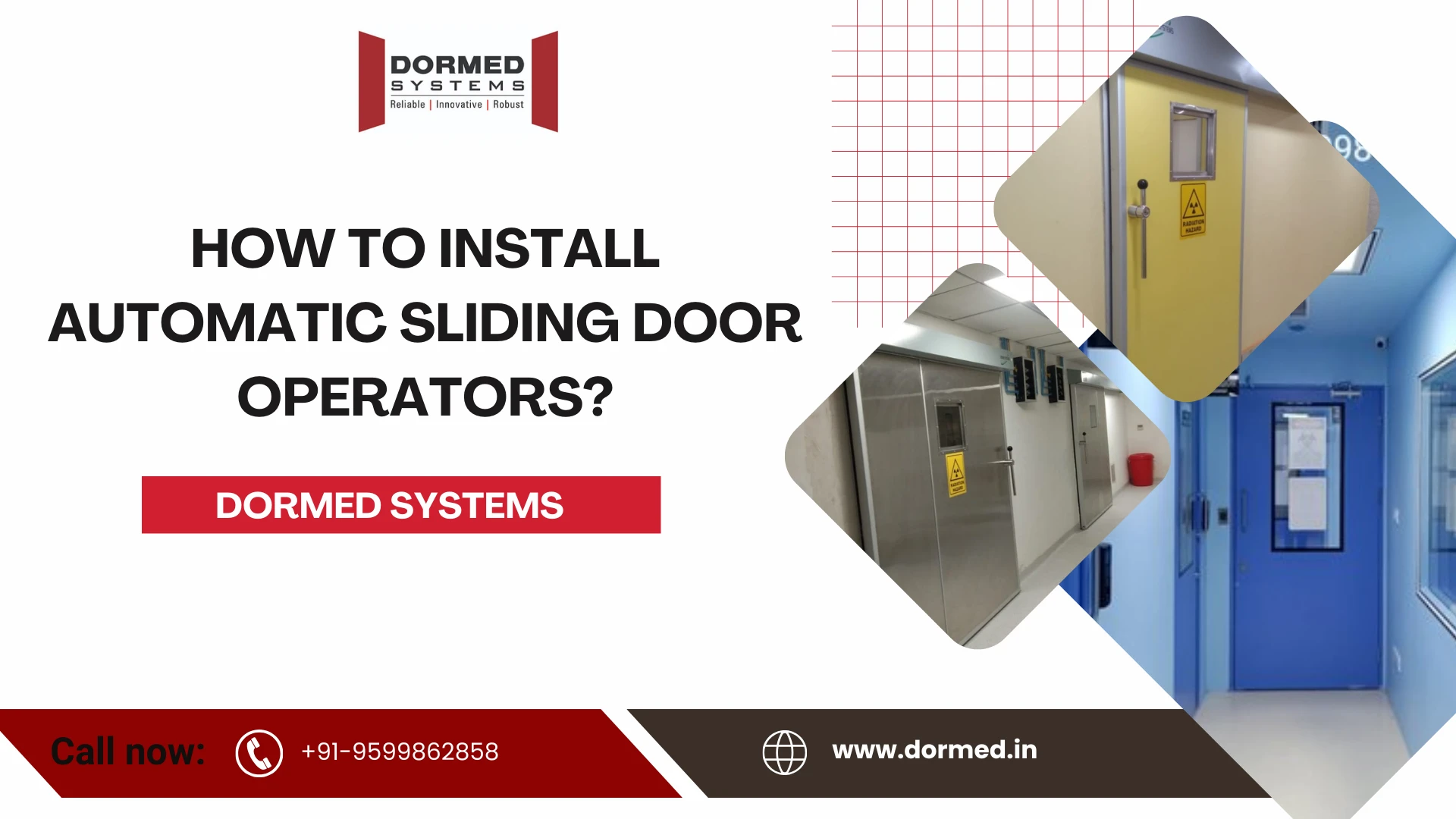
Automatic sliding doors are becoming very common in offices, hospitals, shopping malls, and homes. They are modern, convenient, and safe. If you are using DORMED SYSTEMS automatic sliding door operators, the installation process is simple as long as you follow the correct steps. In this guide, we will explain step by step how to install these doors in simple words, making it easy even for beginners.
Introduction
Automatic sliding doors are very popular today You can see them in offices, hospitals, shops, and even homes. They open and close automatically when someone comes near. This makes them very convenient and safe. DORMED SYSTEMS makes best quality sliding door operators. Their doors work smoothly last long and save energy. They are easy to use and modern in design.
Installing an automatic sliding door may seem difficult, but if you follow the right steps, anyone can do it. This guide will show you how to install a DORMED SYSTEMS sliding door step by step. You will also learn some safety tips, maintenance tricks, and solutions for common problems. you will know everything you need to install your automatic sliding door quickly and correctly.
How to Install Automatic Sliding Door Operators – Step by Step Guide
Installing an automatic sliding door operator may look like a complex task but if you follow each step carefully it becomes simple. DORMED SYSTEMS automatic sliding doors are designed in such a way that they can be installed in offices shops hospitals malls hotels and many other commercial places.
In this guide we will go through every step one by one in detail. From fixing the track to adjusting the door body everything will be explained in simple words so that even a beginner can understand and install it without confusion.
Step 1 – Fix the Track on the Wall
The first step is fixing the track on the wall. The track is the base of the entire system because every other component will be installed on this track. You need to make sure that the track is placed straight and aligned properly. If the track is not fixed in a straight line then the door will not slide smoothly.
Take a measurement of the wall where you want to install the door. Mark the level points with a scale and pencil. Use a drilling machine to make small holes for screws. Place the track on the wall and fix it tightly with screws. Make sure there is no gap between the track and the wall because loose installation can cause vibration and noise when the door moves.
Step 2 – Install the Power Switch
After fixing the track the next step is to install the power switch. The switch should be placed on the right side of the track. Keep the switch about 4 cm away from the right end of the track. This position helps in easy wiring and connection later.
Fix the switch box with screws on the wall. Do not connect the wires yet. Just place it in the correct position so that it is ready for the next steps.
Step 3 – Install the Motor
The motor is the heart of the sliding door system. Without the motor the door cannot move automatically. To install the motor first loosen the four screws on it.
Now take the motor and snap its backside into the track. Make sure that the wires of the motor are free and not pressed under any part. If the wires are pressed they can get damaged and stop working. Once the motor is properly placed fix it by tightening the screws again. The motor should sit firmly on the track without any movement.
Step 4 – Install the Return Pulley
The return pulley works like a helper that makes the belt move smoothly. To install it loosen the four screws at the bottom of the pulley. Snap the back of the return pulley into the track. You can also slide it from the left side if that is easier.
Another way is to remove the screws first put the sheet into the track and then place the return pulley back. After that fix the screws tightly. The pulley must be in line with the motor otherwise the belt will not rotate properly.
Step 5 – Install the Controller
The controller is the brain of the system because it controls the motor the sensors and the remote. To install the controller loosen the two screws on it. Snap the controller into the track and fix its position based on the length of the wire. Once you are satisfied tighten the screws again.
Now put the power switch wire into the track. Wrap the wire carefully so that it does not hang too long. Connect the wire to the controller. Remember the upper interface is 9-hole and the lower interface is 6-hole. Make sure you insert the wire in the correct interface.
Step 6 – Install the Tooth Belt
The tooth belt is responsible for moving the door along the track. To install it first loosen the four screws at the top of the return pulley. Adjust the return pulley position by tightening the right screw.
Now loosen the screws on the belt connector and separate the clip. Hang the belt on the return pulley and then on the motor. Adjust the length of the belt according to the door size. Cut off the extra belt if needed.
Clamp the belt with the clip keeping the screw hole facing down. If the belt feels loose adjust the return pulley to tighten it. Finally tighten the four screws at the top of the return pulley.
Step 7 – Install the Glass Clamp
Now we move to fixing the door glass with clamps. Loosen the screws on the clamp and place the glass between them. Tighten the screws again so that the glass does not move.
If you have one door you will need two short clamps. Both clamps should be placed on the same side with screws properly tightened.
Step 8 – Install the Hanger
The hanger connects the door glass with the track. To install it first loosen the two screws and remove the anti-off device.
Now connect the hanger and the clamp with screws. Make sure both parts are aligned perfectly. Tighten the screws firmly. After that hang the door body on the track carefully. The door should move freely on the track.
Step 9 – Install the Anti-Off Device
The anti-off device prevents the door from falling off the track. Lift the anti-off key up about 2 mm from the bottom of the track. Tighten the screws properly. This way the device will not scratch the track and at the same time will hold the door in position.
Now install the short belt connector to the right door and tighten its screws.
Step 10 – Install the End Stop
The end stop is needed to control the open and close limits of the sliding door. For a double-leaf sliding door you will need four hangers four clamps and two belt connectors.
Install the short belt connector to the first hanger of the right door. Install the long belt connector to the second hanger of the left door. Now close the door to the middle point.
Loosen the screw and snap the end stop. Keep a 1 cm space between the two doors then tighten the screw. Use a clip to connect the belt and the long belt connector. Place the long belt connector on the left side and the short one on the right side.
Now manually open the door to the maximum wide position and install the other end stop.
Step 11 – Connect the Input Power Line
To connect the power first remove the cover of the controller. The first two screws are used to connect the input power line. The fifth and sixth screws are used to connect the sensor.
Insert the input power line into the first two screws. There is no difference between positive and negative so you can connect them directly. After that put the cover back on.
Step 12 – Adjust the Door Body
This is the final step where we test and adjust the system.
Turn the power switch to 0 which means power off. Manually move the door to the half-open position. Now turn the switch to 1. The door will automatically open. After that again turn the switch to 0.
On the controller find the button marked A. Turn it to R. Now again move the door manually to half-open. Switch on the power by turning it to 1. This time the door will automatically close.
Find the TEST button on the controller and push it once. You can adjust different parameters manually according to your requirement.
If you have a remote control connect it to the controller. The side with a hole should face outward. After connection power on the system and test the remote control.
Final Words
By following these twelve steps you can successfully install an automatic sliding door operator from DORMED SYSTEMS. The process may look long but if you go step by step it becomes easy. Make sure that every screw is tightened properly every wire is connected in the right place and the belt is adjusted to the correct length.
Common Problems and Solutions in Automatic Sliding Door
Even after proper installation sometimes small issues can come up in automatic sliding doors. Here are the most common problems and their simple solutions.
1. Door Does Not Open Automatically
Problem – The motor is running but the door is not opening or the door is not responding at all.
Solution –
- Check if the power switch is turned on
- Make sure the input power line is connected properly in the controller
- See if the remote control or sensor is connected correctly
- If the belt is loose tighten the return pulley
2. Door Makes Noise While Moving
Problem – The door opens and closes but creates unusual noise or vibration.
Solution –
- Check if the track is straight and fixed tightly on the wall
- See if the screws of motor clamps and hangers are loose
- Apply a small amount of lubricant on the track and pulley
- Make sure there is no dust or small stone inside the track
3. Door Stops in the Middle
Problem – The door starts moving but suddenly stops at half position.
Solution –
- Adjust the end stop and keep at least 1 cm gap between two doors
- Check if the tooth belt is too tight or too loose
- Reset the controller and re-adjust the parameters by pressing the TEST button
4. Remote Control Not Working
Problem – The door works manually but does not respond to remote control.
Solution –
- Check the remote battery and replace if weak
- Make sure the remote is connected to the controller with the correct interface
- Keep the remote facing outward with the hole side in front
- Reconnect the wire if loose
5. Door Glass is Loose
Problem – The glass door shakes or feels loose while sliding.
Solution –
- Check the glass clamp screws and tighten them properly
- Ensure the hanger is aligned correctly with the clamp
- If clamps are damaged replace them immediately
6. Door Opens but Does Not Close
Problem – The door opens smoothly but does not close automatically.
Solution –
- Turn the controller switch A to R and reset the closing function
- Test the door by powering off and then powering on again
- Check if any object or sensor is blocking the closing side
7. Sensor Not Responding
Problem – People walk in front of the door but the sensor does not detect movement.
Solution –
- Check sensor connection on 5th and 6th screw of the controller
- Clean the sensor surface with a dry cloth
- Adjust the sensor angle for correct detection
- Replace the sensor if still not working
8. Belt Slips from Pulley
Problem – The belt comes out or slips from return pulley or motor pulley.
Solution –
- Make sure the belt is clamped tightly with the clip
- Adjust the return pulley and tighten the screws properly
- Cut extra belt if too long
Why Choose DORMED SYSTEMS?
- High-quality materials and advanced technology
- Smooth and silent operation
- Easy installation and maintenance
- Energy-efficient and durable
Conclusion
Automatic sliding doors are modern, convenient, and safe. DORMED SYSTEMS operators are reliable and easy to install. By following proper tools, preparation, and step-by-step instructions, you can install your automatic sliding door perfectly. Focus on safety and regular maintenance to ensure long-lasting and trouble-free operation.
FAQs About Automatic Sliding Doors
Q1 – Can I install a DORMED SYSTEMS door myself?
Yes, with basic tools and proper instructions, you can install it yourself.
Q2 – How long does installation take?
It usually takes 2-4 hours depending on the door size and type.
Q3 – Can the door be used in heavy traffic areas?
Yes, DORMED SYSTEMS operators are designed for residential and commercial use.
Q4 – How often should maintenance be done?
Monthly cleaning and yearly professional check-up are recommended.